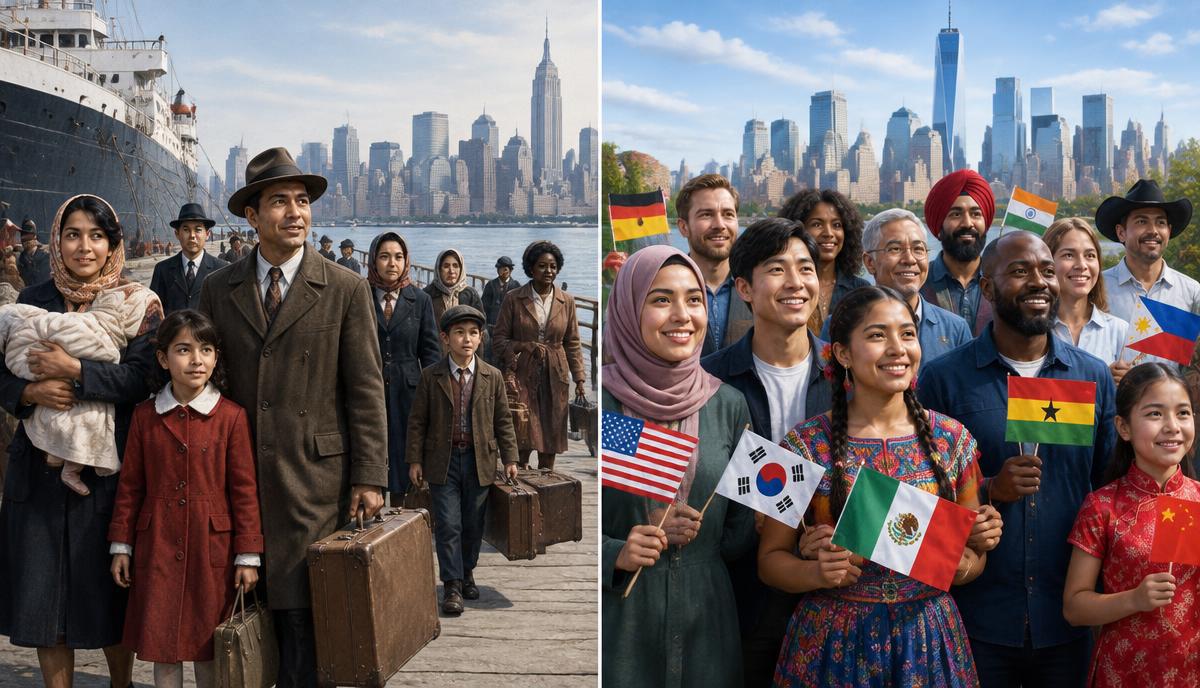
ALL FLAGS DAY

HOW AMERICA
BECAME AMERICA

Before borders.
Before the United States.
Before immigration laws.
There were already people here.

America did not come from one people, one language, or one story.

Follow the story
An illustrated Indigenous community living and farming beside a river

BEFORE 1492

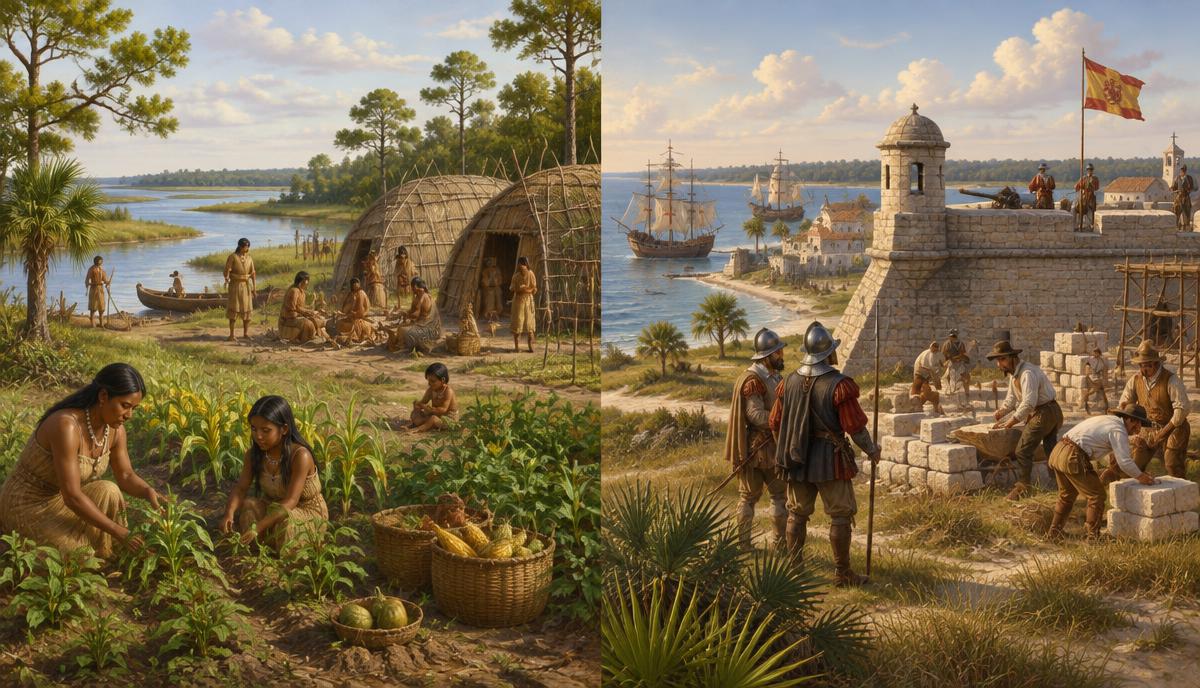
INDIGENOUS NATIONS WERE HERE FIRST

Long before the United States existed, Indigenous peoples lived across North America in many distinct nations, cultures, languages, and communities.

America’s story did not begin with immigration.
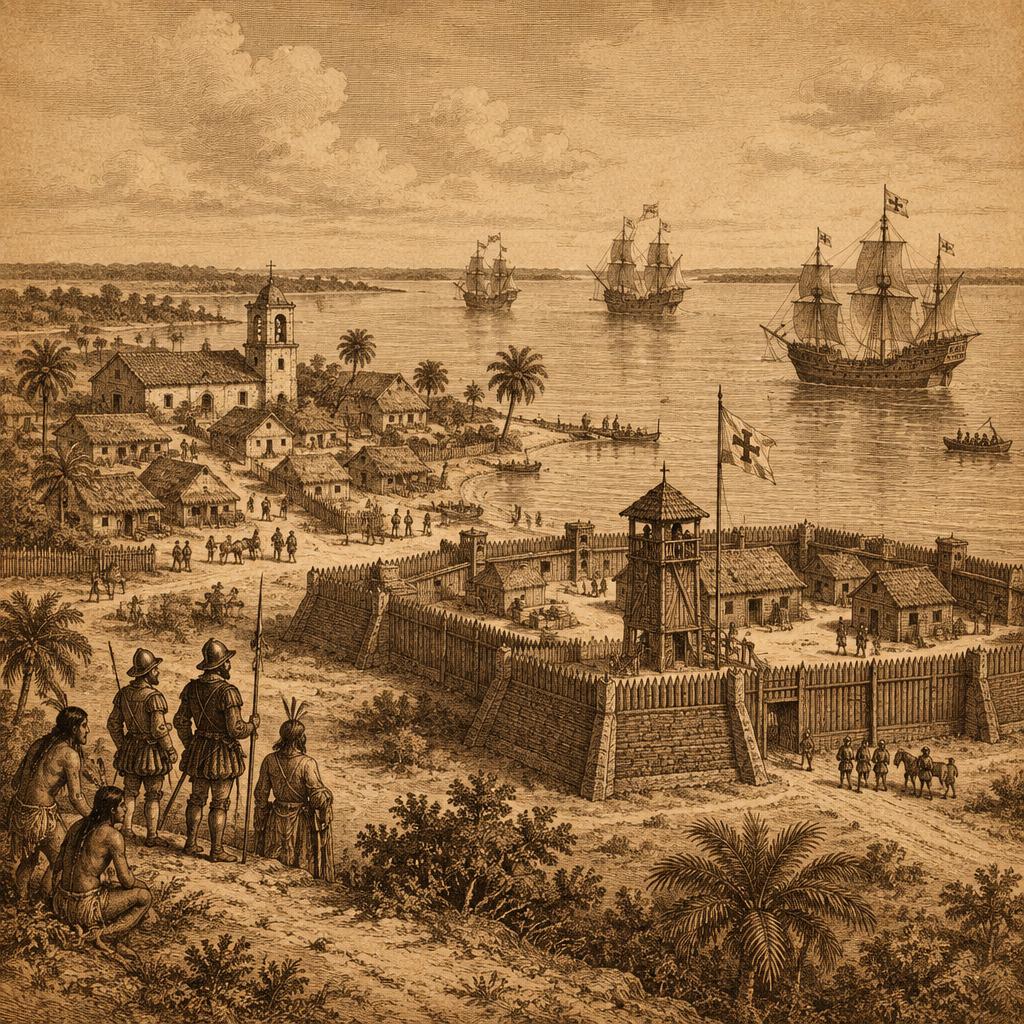
An engraved view of the St. Augustine settlement and harbor

1565

EUROPEAN SETTLEMENT BEGINS

St. Augustine, Florida became the first permanent European settlement in what is now the United States.

An illustrated reconstruction of the Jamestown settlement beside the river

1607

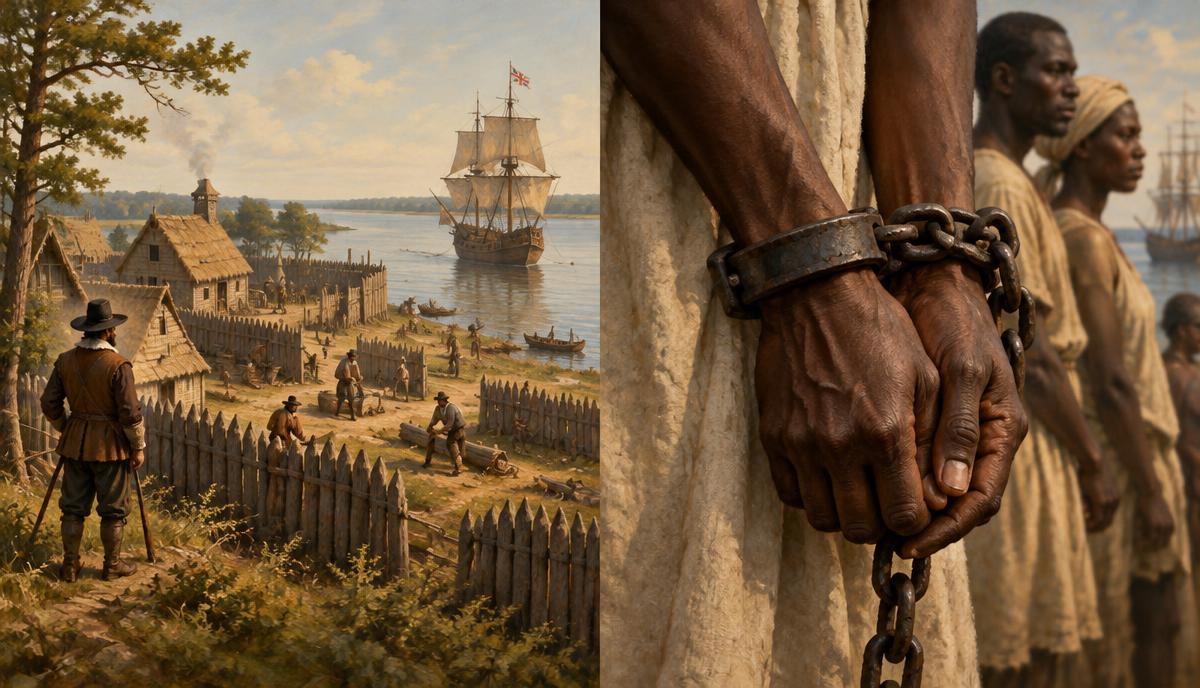
JAMESTOWN

English colonists established Jamestown, the first permanent English settlement in what became the United States.

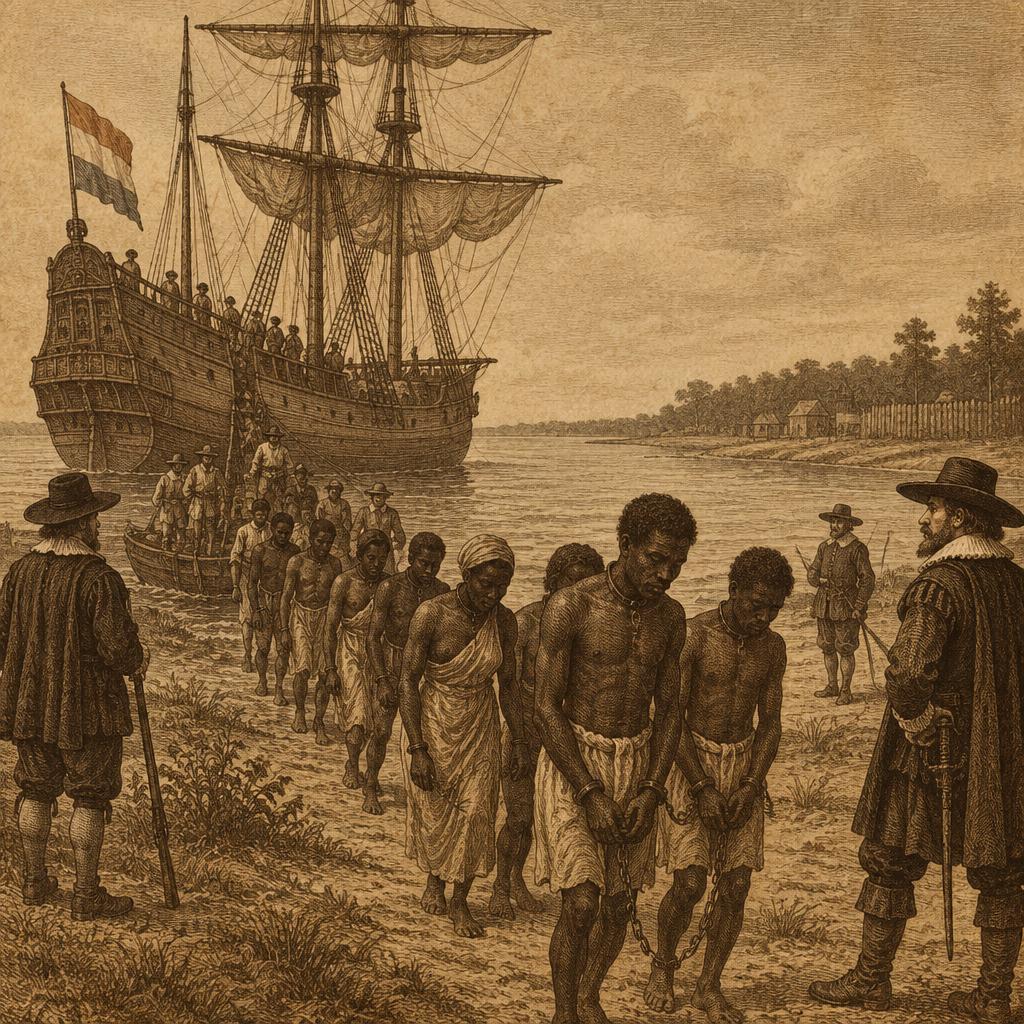
An engraved scene of the first enslaved Africans arriving in Virginia

1619

AFRICANS ARRIVE BY FORCE

Africans were brought to English Virginia after being captured and forced across the Atlantic.

This was not voluntary immigration.

Some Americans came by choice. Others were brought here by force.
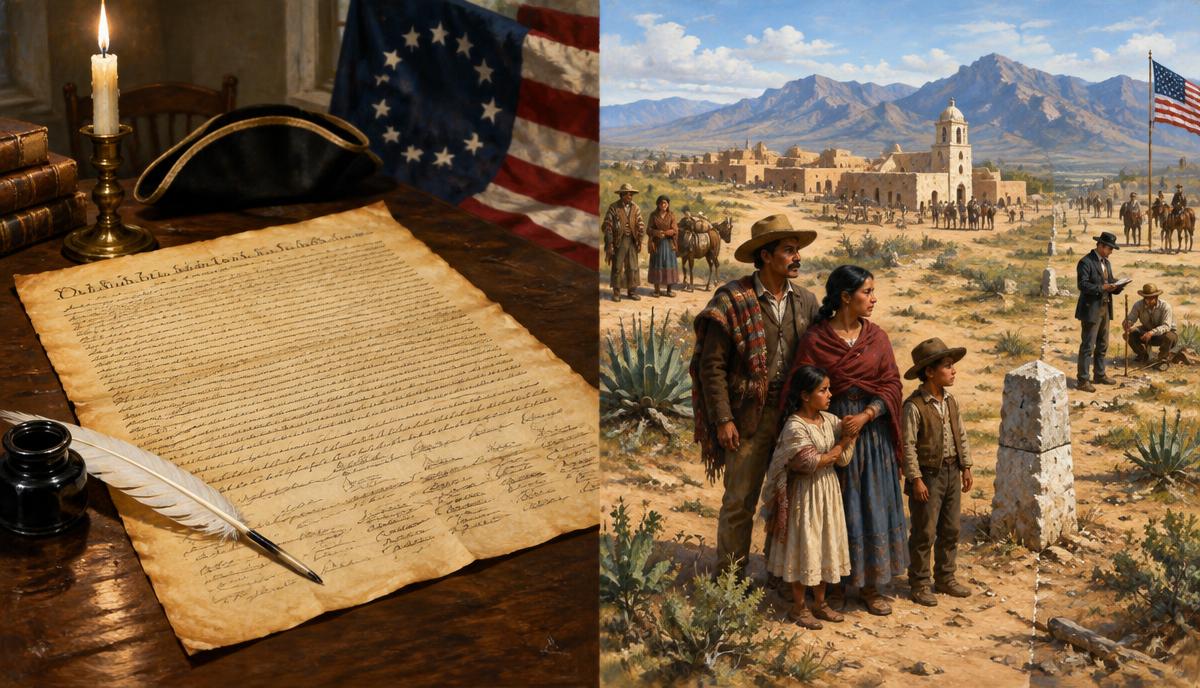
An illustrated Declaration of Independence with a quill

1776

THE UNITED STATES DECLARES INDEPENDENCE

The United States declares independence. This is the moment the country officially begins.

An illustrated Mexican American family in the borderlands

1848

THE BORDER MOVES

The Treaty of Guadalupe Hidalgo transferred a vast amount of Mexican territory to the United States.

Mexican families were already living throughout these lands. Those who remained were given the opportunity to become U.S. citizens and promised protections for their liberty, property, and civil rights.

For many families, they didn’t cross the border. The border crossed them.
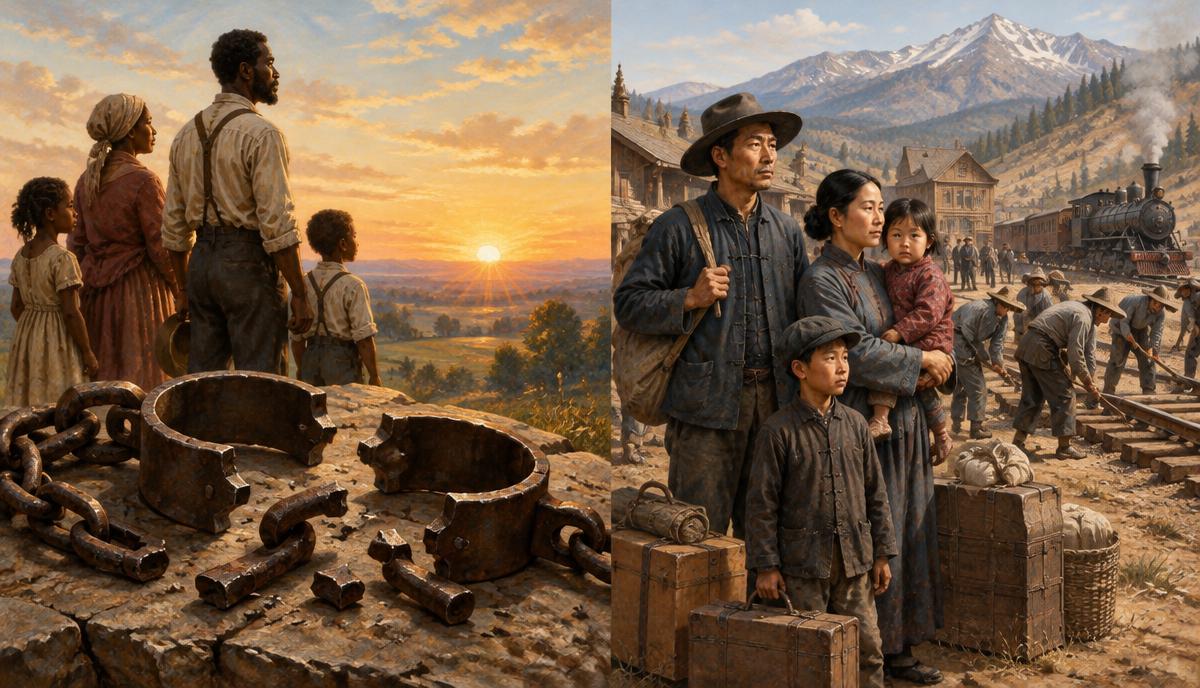
Broken shackles at sunrise symbolizing abolition

1865

SLAVERY ABOLISHED NATIONWIDE

The 13th Amendment abolished slavery in the United States.

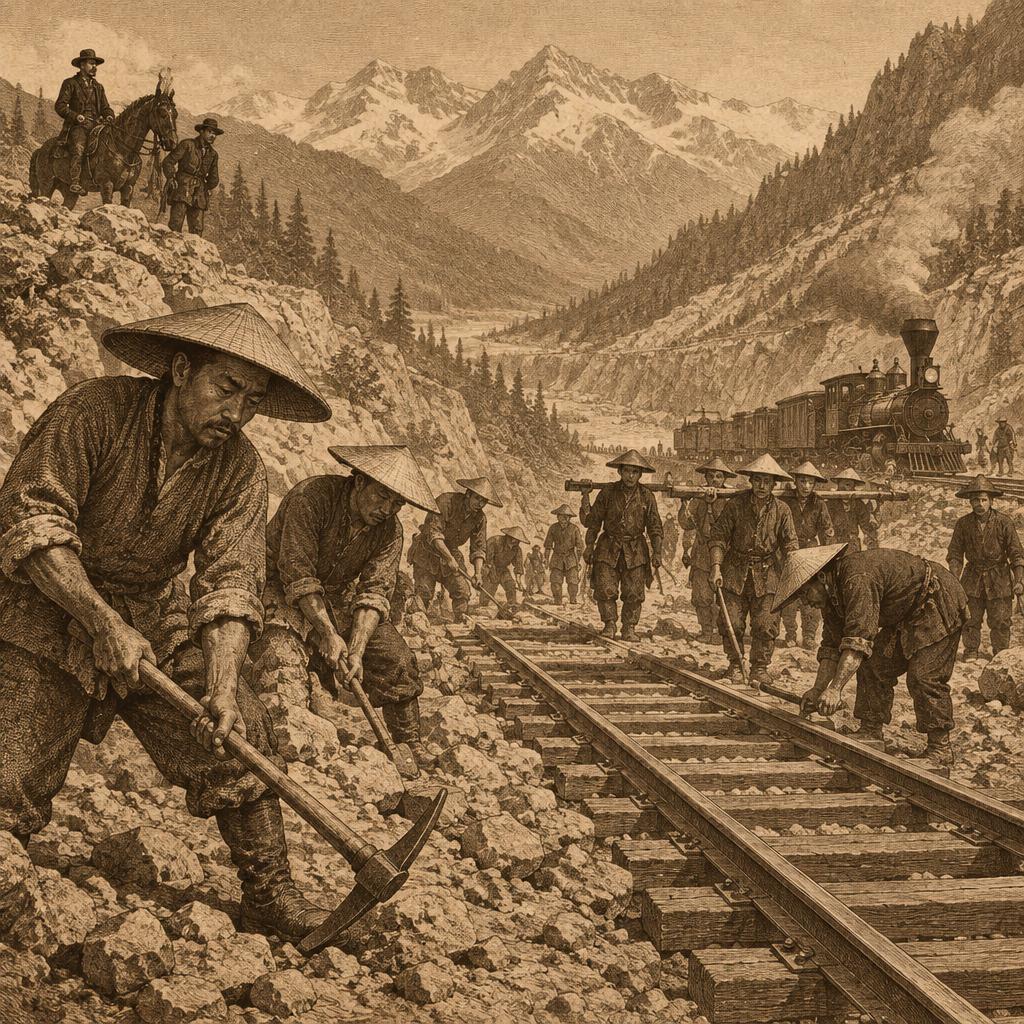
An engraved scene of Chinese workers building the transcontinental railroad

1882

AMERICA CLOSES A DOOR

The Chinese Exclusion Act sharply restricted Chinese immigration.

America’s immigration history includes both opportunity and exclusion.

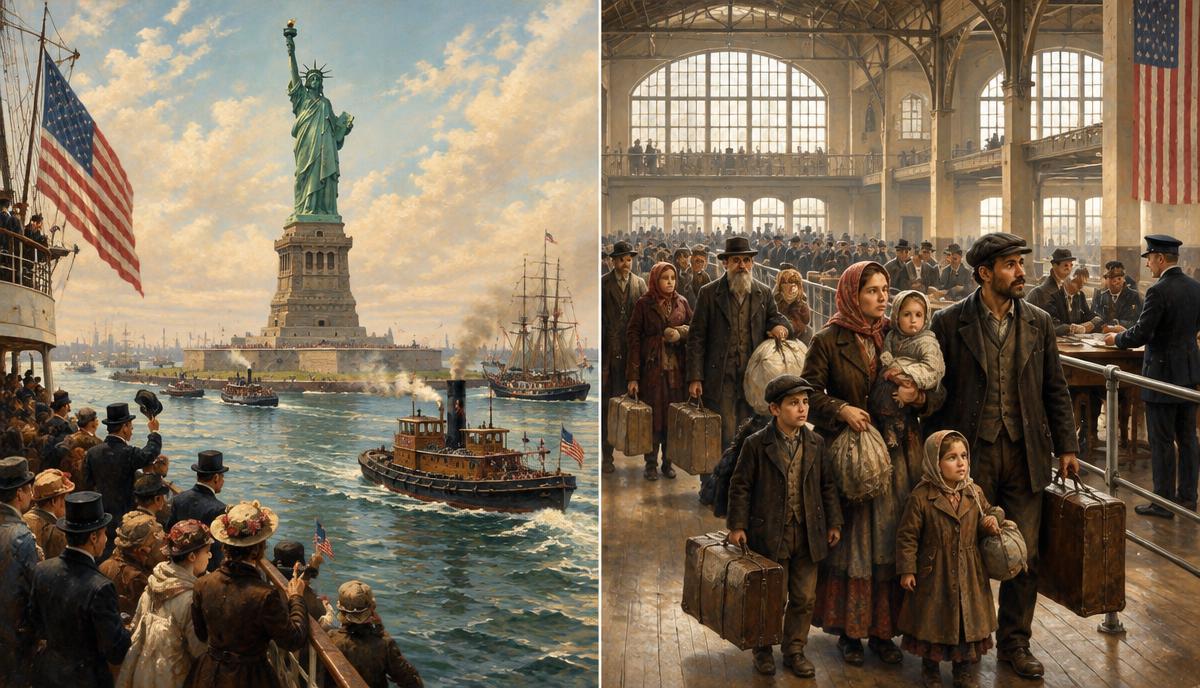
An illustrated dedication-era view of the Statue of Liberty

1886

THE STATUE OF LIBERTY

The Statue of Liberty is dedicated. It later becomes one of America’s most recognizable symbols of liberty and immigration.

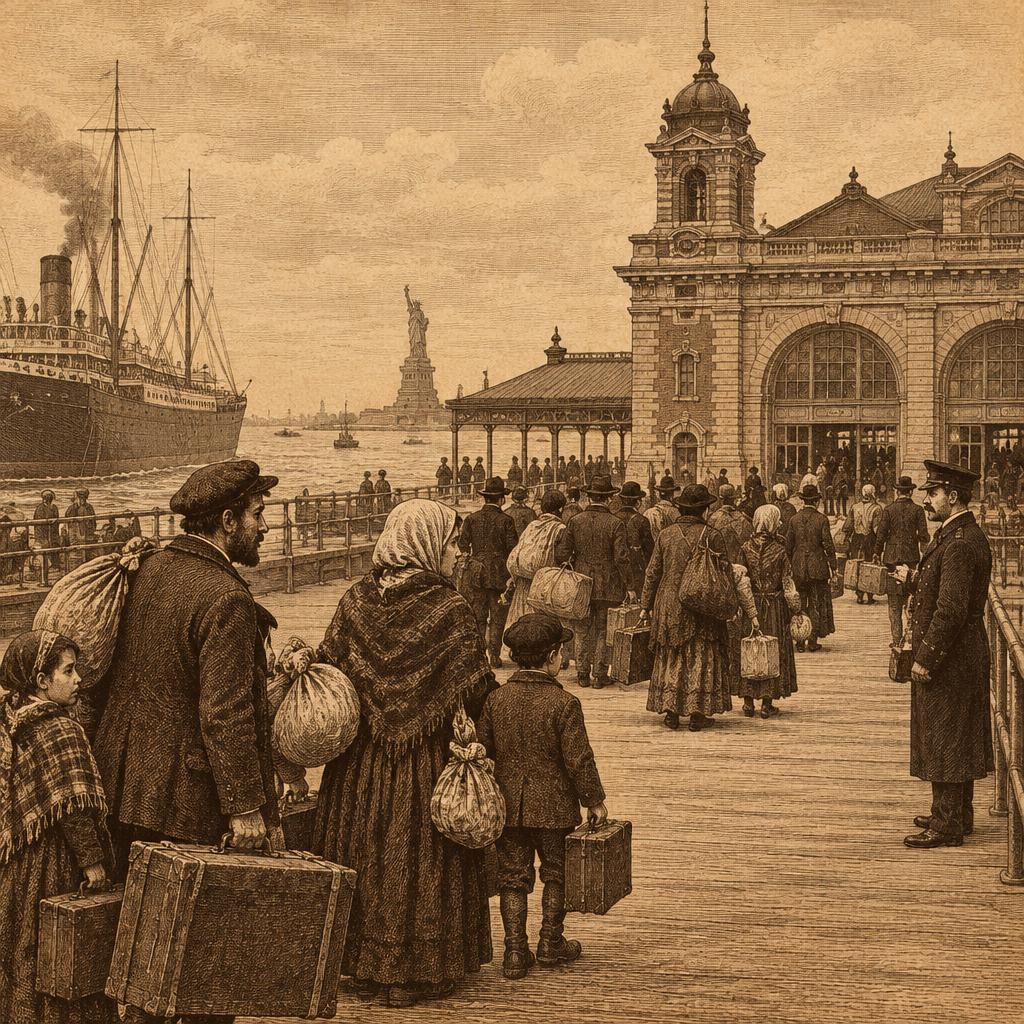
An engraved scene of immigrant families arriving at Ellis Island

1892

ELLIS ISLAND OPENS

Millions of immigrants would pass through Ellis Island while building new lives in America.

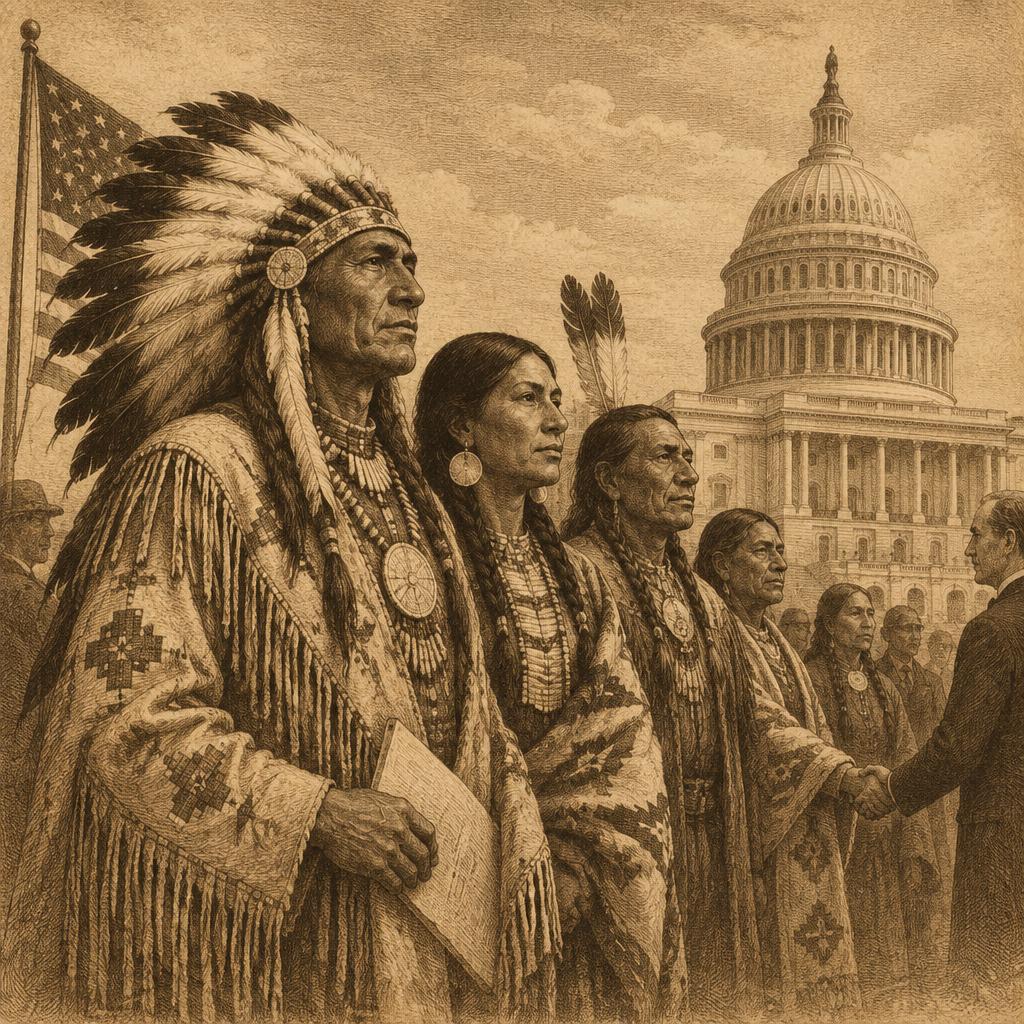
An engraved scene of Native American leaders before the US Capitol

1924

NATIVE AMERICANS RECEIVE U.S. CITIZENSHIP

Congress passed the Indian Citizenship Act.

The first peoples of this land had to wait generations for the United States to recognize them as citizens.
An illustration of American families from many backgrounds

1929–1940s

MEXICAN FAMILIES ARE FORCED OUT

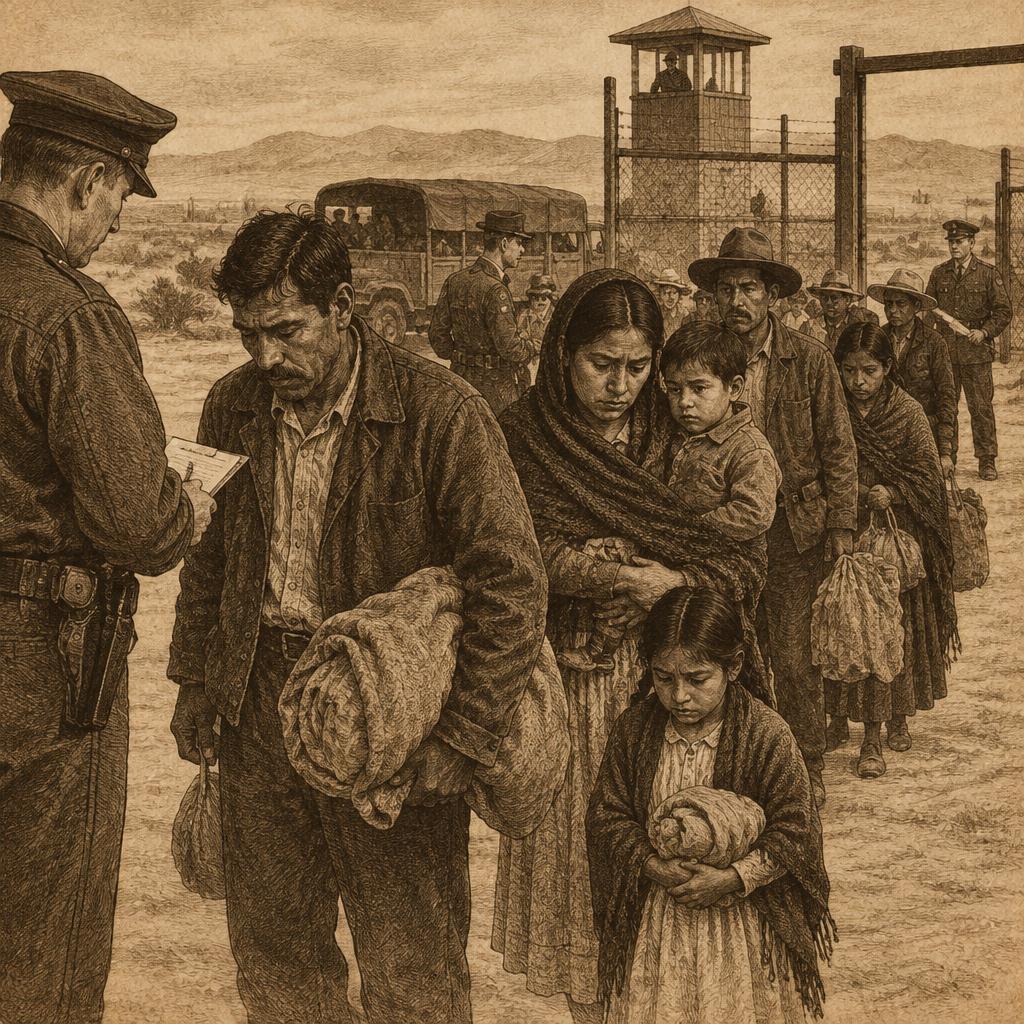
During the Great Depression, Mexican immigrants and Mexican Americans became targets of mass repatriation campaigns.

Hundreds of thousands — and by some historical estimates roughly 2 million people of Mexican descent — were removed, pressured, or coerced into leaving the United States. Many were U.S. citizens. Families were separated and communities were disrupted.

Some American citizens were sent to a country they had never called home.

California later formally apologized for its role in these removals and coerced emigration.

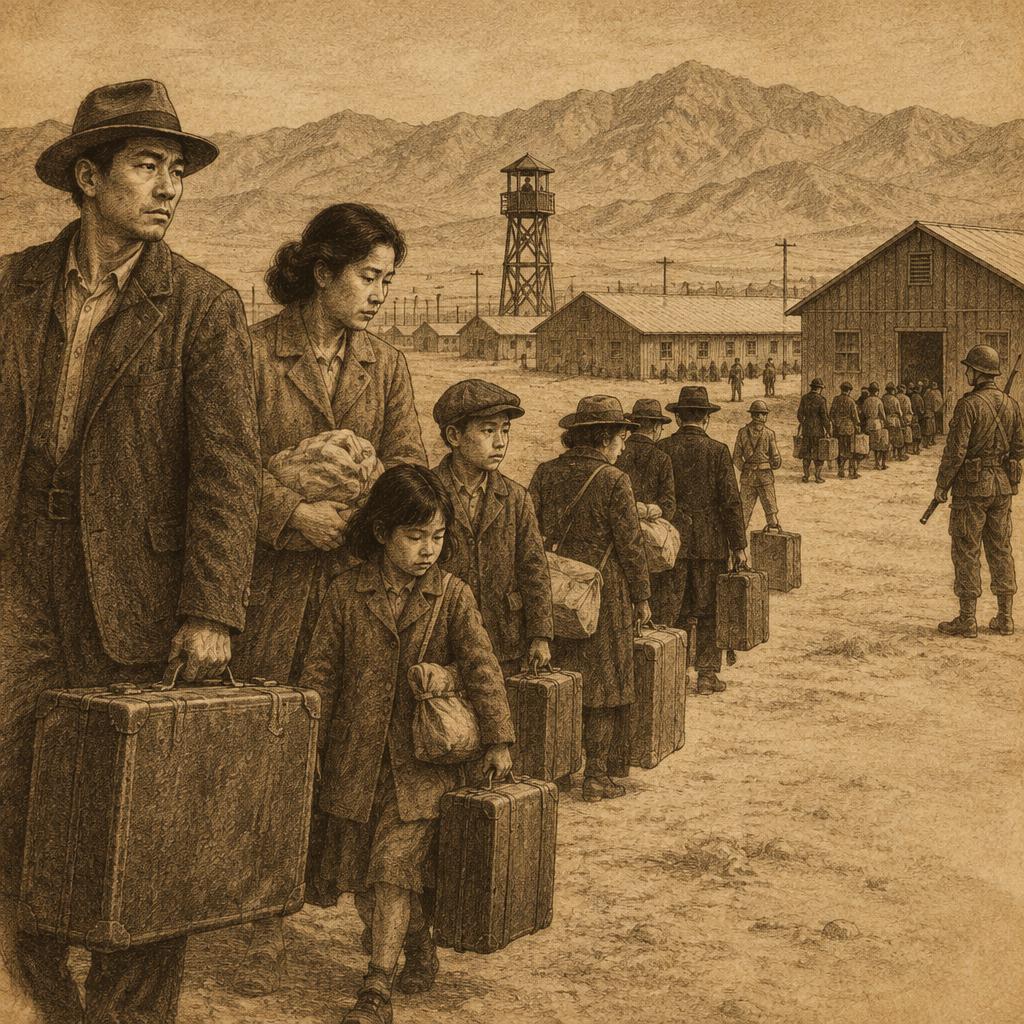
An engraved scene of Japanese American families arriving at an incarceration camp

1942

JAPANESE-AMERICAN FAMILIES ARE INCARCERATED

More than 120,000 people of Japanese ancestry were forcibly removed from their homes and incarcerated during World War II. Many were American citizens.

Citizenship did not always protect Americans from discrimination based on their ancestry.
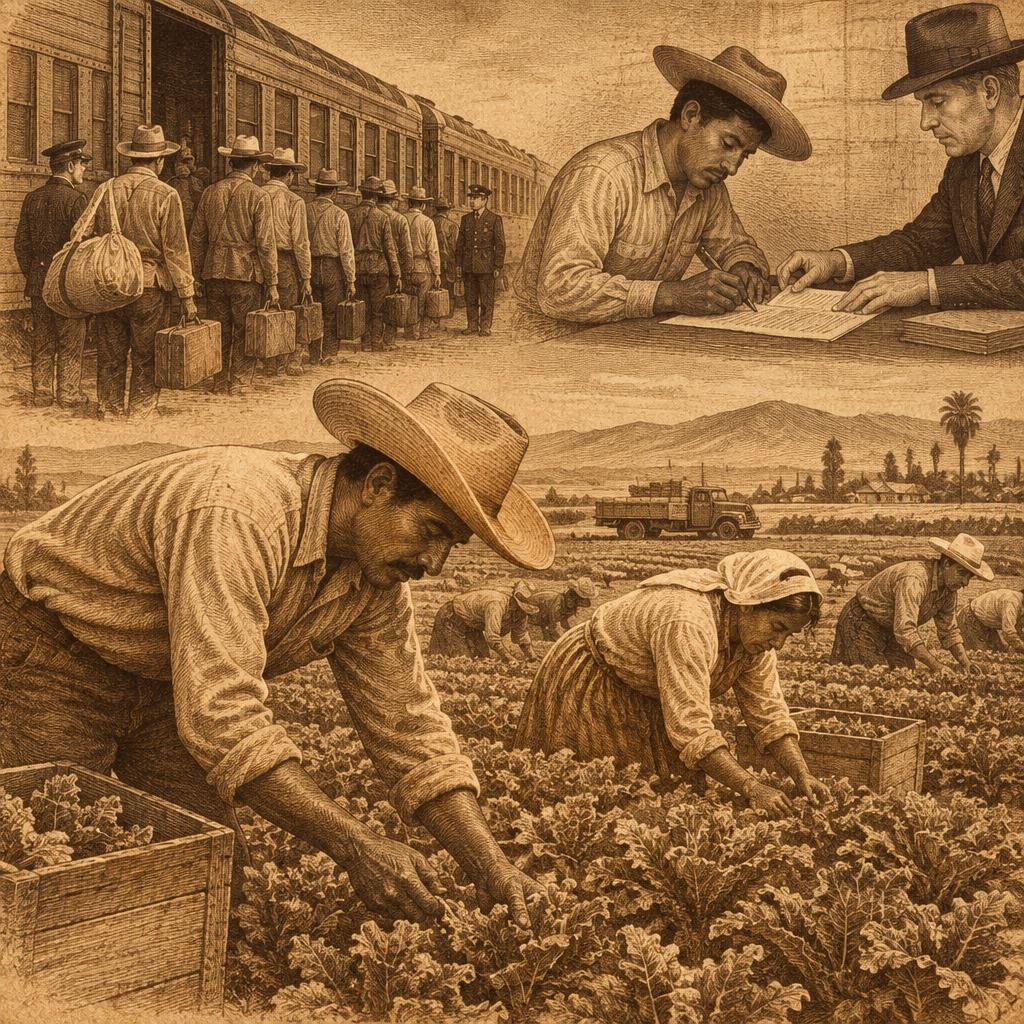
An engraved scene of Bracero Program farmworkers in California fields

1942–1964

AMERICA RECRUITS MEXICAN WORKERS

Through the Bracero Program, the United States recruited Mexican workers to help fill critical labor shortages. Millions of labor contracts were issued during the program.

America depended on Mexican labor while Mexican communities also faced discrimination and removal.
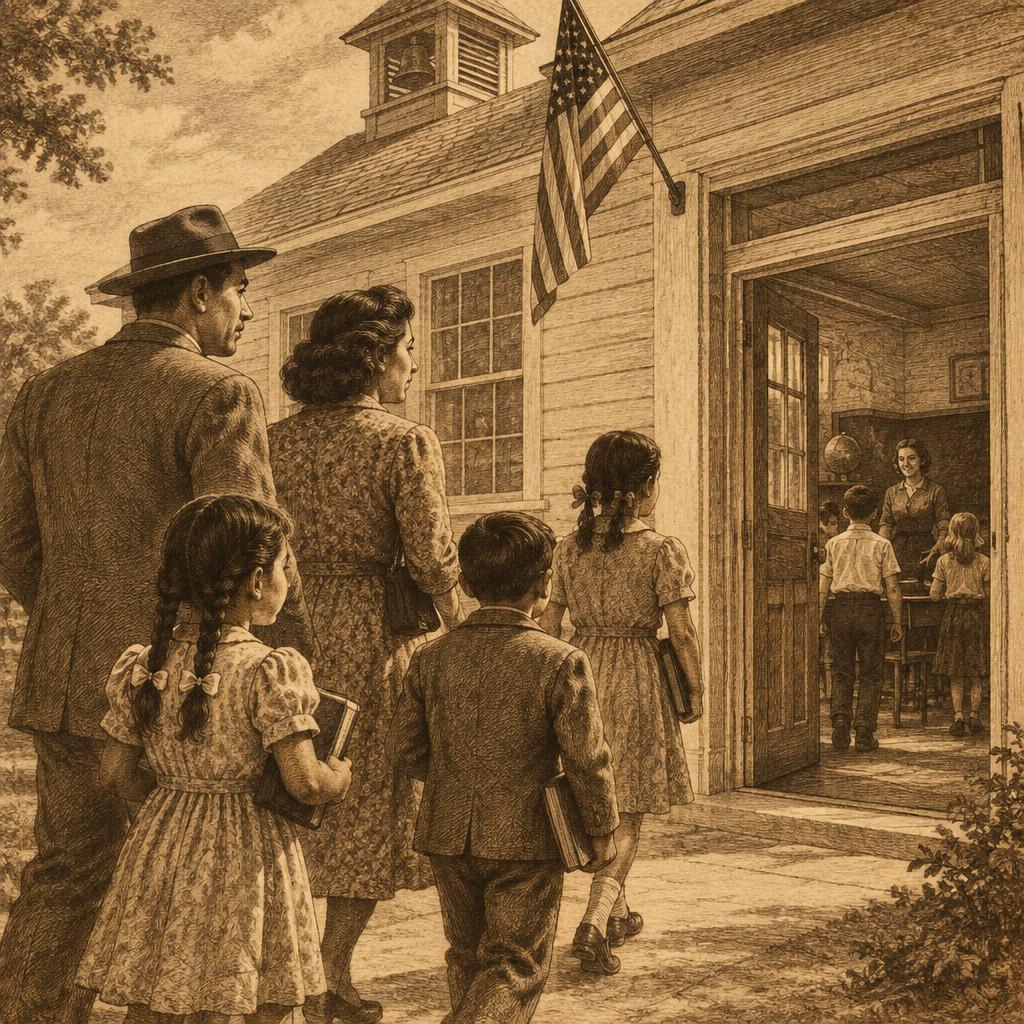
An engraved scene of Mexican American children entering a schoolhouse

1946

MEXICAN-AMERICAN FAMILIES FIGHT SCHOOL SEGREGATION

Mexican-American families challenged the segregation of children of Mexican descent in California schools through Mendez v. Westminster.

Mexican Americans didn’t just inherit American rights. They helped fight to make those rights real.
An engraved scene of Mexican American families at a deportation checkpoint

1954

MASS DEPORTATIONS BEGIN AGAIN

The federal government conducted a large-scale deportation campaign targeting undocumented Mexican immigrants.

An illustrated group of immigrant families arriving in an American city

1965

IMMIGRATION CHANGES AMERICA AGAIN

The Immigration and Nationality Act of 1965 ended the old national-origins quota system.

Immigration opportunities expanded for families and people from Asia, Latin America, Africa, southern Europe, and other parts of the world.

An engraved portrait of diverse American families across generations

1988

AMERICA ACKNOWLEDGES A WRONG

The United States formally apologized to surviving Japanese Americans who had been incarcerated during World War II and provided compensation.

Part of loving a country is being willing to recognize when it failed to live up to its own principles.

TODAY

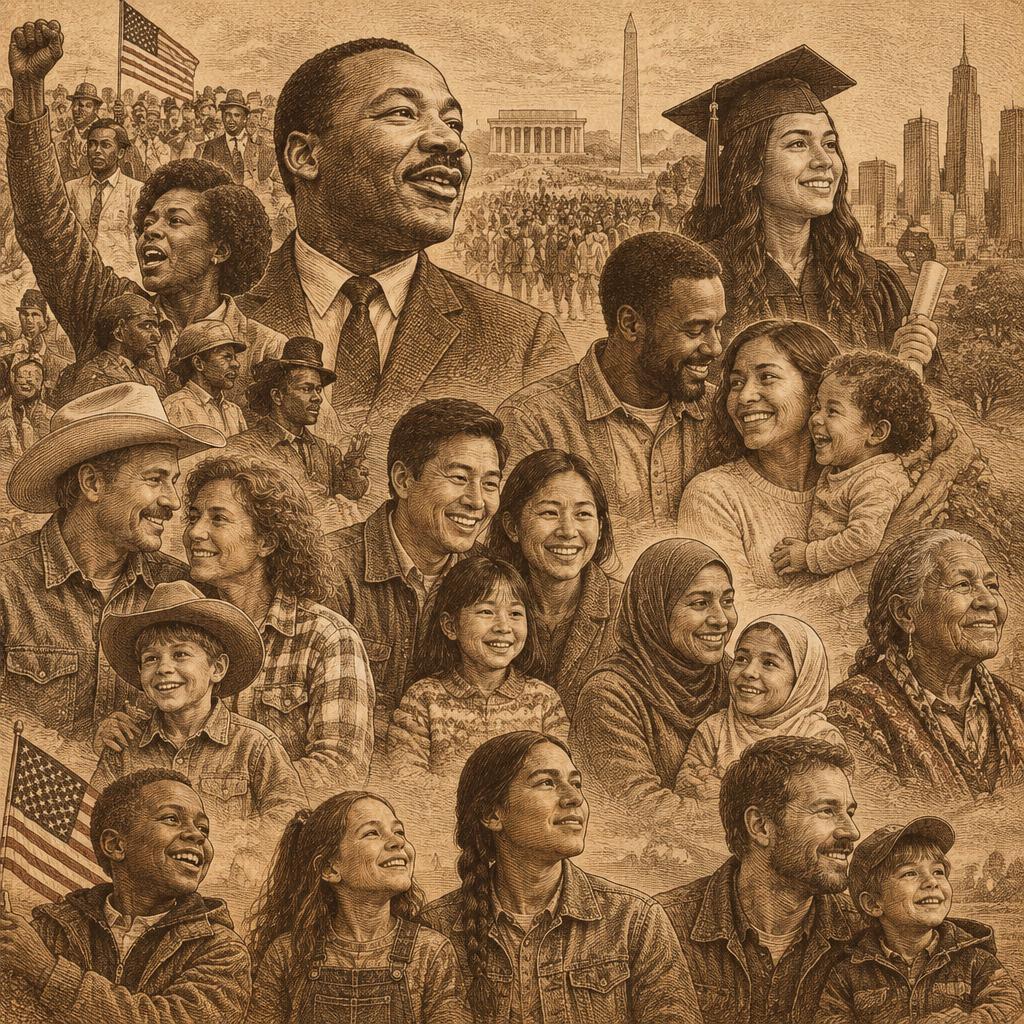
THERE IS NO ONE WAY TO BECOME AMERICAN

Some were here before the United States existed.
Some became Americans when borders changed.
Some were brought here against their will.
Some came as workers.
Some escaped war or persecution.
Some immigrated searching for opportunity.
Some were born here to immigrant parents.
Some families have been American for generations.